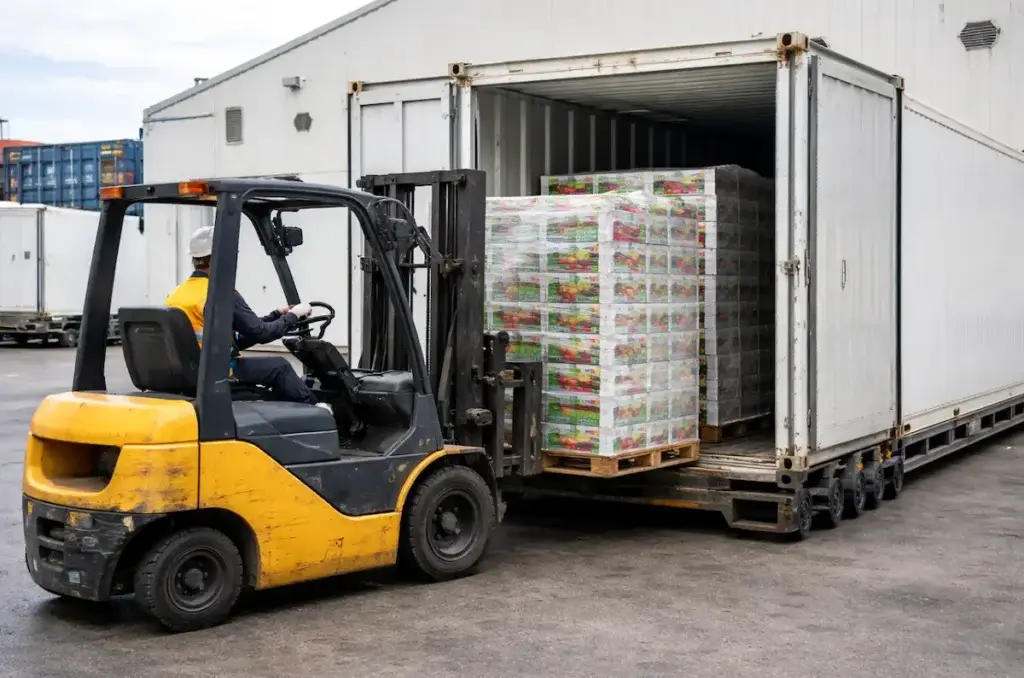
American agricultural products feed the world. From frozen meat exports to Asia to fresh produce reaching European markets, U.S. agricultural exporters depend on ocean freight to deliver products that maintain quality across thousands of miles and weeks of transit.
Agricultural ocean export requires more than booking container space. Equipment selection, temperature management, regulatory compliance, and documentation all determine whether products arrive in saleable condition or spoiled and rejected.
What Agricultural Products Move by Ocean Export
Jade International handles ocean export for the complete range of agricultural products. Grains and soybeans traveling to Asian markets, frozen meat shipments destined for Europe and the Middle East, fresh produce exports to Latin America, dairy products requiring controlled temperature, and specialty agricultural commodities all move through our ocean export services.
The diversity of agricultural exports means no single shipping solution works for everything. A container of frozen beef heading to Japan requires different equipment and handling than a shipment of soybeans to China or fresh avocados to Europe. Understanding these differences ensures product integrity from U.S. facilities to international buyers.
Temperature-Controlled Equipment for Agricultural Exports
Agricultural products fall into three temperature categories, each requiring specific container equipment:
Frozen Products (-18°C to -25°C)
Frozen meat, seafood, processed foods, and other products requiring freezing travel in standard reefer containers. These refrigerated containers maintain temperatures as low as -25°C (-13°F) throughout ocean transit, with some specialized units capable of -35°C for ultra-frozen products.
Frozen cargo must be pre-frozen before loading—reefer containers maintain temperature but don’t freeze products. The container’s refrigeration unit circulates cold air beneath and around the cargo through T-shaped decking designed for proper airflow. This prevents temperature variations that cause freezer burn or partial thawing.
Jade International coordinates reefer container bookings for frozen agricultural exports, ensuring proper equipment availability and temperature settings verified before loading.
Fresh/Refrigerated Products (0°C to 12°C)
Fresh produce, chilled meat, dairy products, and other refrigerated agricultural goods require precise temperature control without freezing. Standard reefer containers handle this temperature range with adjustable settings for specific products.
Beyond temperature, fresh produce often requires controlled atmosphere settings. Modified atmosphere (MA) or controlled atmosphere (CA) reefer containers adjust oxygen and carbon dioxide levels to slow ripening and extend shelf life. Fresh apples, pears, and other fruits benefit significantly from CA technology during long ocean transits.
Humidity control matters for many fresh products. Reefer units include dehumidification functions maintaining relative humidity between 60-85% depending on cargo requirements. Too much humidity causes mold; too little causes product desiccation.
Ambient/Dry Products
Grains, soybeans, nuts, and other agricultural products not requiring temperature control travel in standard dry containers. However, ventilation becomes critical for these products.
Contrary to common assumption, dry grain and similar products don’t typically use ventilated containers for ocean export. Sealed dry containers protect cargo from moisture intrusion during ocean transit. Ventilated containers are used primarily for specific fresh products requiring air exchange, not for standard grain shipments which need protection from humidity.
Jade helps agricultural exporters select appropriate container types based on product characteristics, destination climate, and transit duration—ensuring the right equipment for each shipment.
Container Sizes and Capacity Planning
Agricultural ocean exports primarily use two container sizes:
20-foot Reefer Containers
Standard 20-foot reefers hold approximately 28 cubic meters of cargo and work well for smaller volume shipments, mixed product loads, and when consolidating from multiple suppliers. Weight capacity typically ranges from 21-27 metric tons depending on the specific unit.
40-foot High Cube Reefer Containers
The 40-foot high cube reefer dominates agricultural ocean exports, accounting for over 90% of global reefer container volume. These units hold approximately 67 cubic meters and offer weight capacity of 26-30 metric tons.
The additional height (9 feet 6 inches vs. 8 feet 6 inches in standard containers) provides better airflow around cargo and accommodates palletized products more efficiently. Most agricultural exporters prefer 40-foot high cubes for cost efficiency—double the capacity of 20-foot units with less than double the freight cost.
Jade International helps agricultural exporters determine optimal container sizes based on product volume, weight distribution, and freight economics. Sometimes splitting shipments across multiple 20-foot units makes sense for mixed products requiring different temperature settings; other times consolidating into 40-foot high cubes maximizes efficiency.
Phytosanitary Certificates and Export Documentation
Agricultural exports face stricter documentation requirements than most other product categories. Plant and animal products carry pest and disease risks that importing countries rigorously control.
Phytosanitary Certificates
Any plant or plant product exported from the United States to most foreign countries requires a phytosanitary certificate. These official documents, issued by USDA’s Animal and Plant Health Inspection Service (APHIS), certify that products are free from pests and diseases of concern to the importing country.
Phytosanitary certificates attest that:
- Products were inspected by authorized officials
- Products are free from quarantine pests
- Products are practically free from other injurious pests
- Products conform to current phytosanitary regulations of the importing country
The exporter’s responsibility: Agricultural exporters must apply for phytosanitary certification through USDA’s Phytosanitary Certificate Issuance and Tracking (PCIT) system. This requires:
- Creating a PCIT account and submitting inspection applications
- Contacting an Authorized Certification Official (ACO) well in advance of shipping
- Making commodities available for inspection, sampling, and testing
- Providing all necessary documentation including import permits, bills of lading, and foreign country requirements
- Ensuring shipments depart within time limits specified by the importing country (typically 30 days from inspection)
Jade International does not obtain phytosanitary certificates on behalf of exporters, this remains the shipper’s responsibility. However, we coordinate ocean freight timing to align with certificate validity periods, ensuring inspected and certified products ship before certificates expire.
Additional Agricultural Export Documentation
Beyond phytosanitary certificates, agricultural ocean exports require:
- Commercial Invoice: Detailed product descriptions, values, harmonized tariff codes, and country of origin for each item
- Packing List: Complete itemization of contents with weights, dimensions, quantities, and marks
- Bill of Lading: Ocean carrier contract specifying shipper, consignee, routing, and freight terms
- Certificate of Origin: Required for certain destinations or when claiming preferential tariff treatment under trade agreements like USMCA
- Export License (when required): Certain agricultural products to specific destinations require USDA or Commerce Department export authorization
- EEI Filing: Electronic Export Information through the Automated Export System for shipments exceeding $2,500 per Schedule B classification
- Import Permits: Many countries require import permits issued by their national plant protection organizations before allowing agricultural product entry. Exporters must obtain these from buyers before shipping.
- Fumigation or Treatment Certificates: When products require pest treatment, official certificates documenting treatment methods and effectiveness must accompany shipments.
Jade International’s ocean export services include coordination of documentation timing—ensuring all certificates, permits, and paperwork align with vessel departure schedules. Our customs brokerage expertise helps agricultural exporters understand documentation requirements for specific destinations, though phytosanitary certification remains the exporter’s direct responsibility with USDA.
Pre-Cooling and Temperature Management
Refrigerated containers maintain temperature—they don’t cool products down. This critical distinction affects agricultural export planning.
Products must be pre-cooled to the desired temperature before loading into reefer containers. Attempting to use the container’s refrigeration to cool warm products creates several problems:
- Condensation formation: Warm products releasing heat create moisture inside the container, potentially causing mold or packaging damage
- Uneven cooling: Products on container edges cool faster than those in the center, creating temperature variations that affect quality
- Refrigeration unit strain: Units designed to maintain temperature, not actively cool large warm loads, may fail under excessive demand
- Extended cooling time: What should be hours of pre-cooling at specialized facilities becomes days in transit, potentially compromising product quality
Agricultural exporters should coordinate pre-cooling at cold storage facilities before container loading. For frozen products, this means blast freezing to -18°C or below. For fresh produce, it means cooling to optimal storage temperature (which varies by product, strawberries at 0°C, bananas at 13°C, tomatoes at 10-12°C).
Jade International helps agricultural exporters coordinate container delivery timing with cold storage facility schedules, ensuring products are properly pre-cooled before reefer containers arrive for loading.
Seasonal Considerations and Peak Volumes
Agricultural ocean export volumes fluctuate seasonally based on harvest cycles and global demand patterns.
- Fresh Fruit Season: Southern Hemisphere summer (December-March) sees massive volumes of grapes, citrus, avocados, and berries from Chile, Peru, South Africa, and Kenya heading to Northern Hemisphere markets. Reefer container availability tightens significantly during these months, and rates increase due to demand.
- Grain Export Season: Fall harvest in the U.S. (September-November) drives peak grain export volumes to Asia and other markets. Dry container availability becomes constrained, and some grain exporters shift to break bulk vessels for larger volumes.
- Frozen Meat Demand: Year-round but with periodic demand spikes tied to international holidays, trade agreements, or supply disruptions in importing countries.
Agricultural exporters planning ocean freight should book containers 2-4 weeks in advance during normal periods, 4-6 weeks during peak seasons. Jade International helps agricultural exporters anticipate seasonal capacity constraints and secure equipment before rates spike or availability disappears.
Why Agricultural Exporters Choose Jade International
Agricultural ocean export requires freight forwarders who understand product-specific requirements, documentation complexities, and equipment nuances that general cargo handlers often miss.
Jade International provides:
- Reefer Equipment Expertise: We coordinate proper container types, temperature settings, and pre-trip inspections ensuring equipment functions correctly before loading your valuable agricultural cargo
- Documentation Coordination: While exporters obtain phytosanitary certificates directly from USDA, we manage ocean freight timing to align with certificate validity periods and coordinate all carrier documentation
- Temperature Monitoring: We work with carriers providing continuous temperature monitoring and immediate alerts if equipment malfunctions during transit
- Port Relationship Management: Our relationships with U.S. export ports ensure efficient container loading and departure scheduling that minimizes port dwell time for time-sensitive agricultural products
- Carrier Selection: We maintain relationships with ocean carriers experienced in agricultural cargo handling and prioritize reefer maintenance
- Destination Coordination: Our network helps coordinate with destination ports and buyers to ensure smooth customs clearance and rapid delivery after arrival
Agricultural products represent significant investments, crops grown over months, livestock raised over years, processing costs, cold storage expenses. Ocean export services that understand the stakes and provide appropriate expertise protect those investments during the critical transit phase.
Getting Started with Agricultural Ocean Export
If you’re exporting agricultural products internationally, working with a freight forwarder experienced in temperature-controlled cargo, regulatory requirements, and agricultural logistics makes the difference between products that arrive in prime condition and shipments that face rejection or loss.
Jade International specializes in agricultural ocean export, we understand the equipment requirements, documentation timelines, and handling protocols that protect product quality from U.S. cold storage to international markets. Contact Jade International to discuss your ocean export requirements. We’ll review your products, explain equipment and documentation needs, and provide comprehensive transit times and pricing for your specific destinations.