Shipping a standard pallet or carton internationally is relatively straightforward. Shipping a 40-ton piece of industrial machinery, a construction crane, or a prefabricated steel structure is an entirely different undertaking. Oversized and heavy cargo requires specialized equipment, detailed planning, specific documentation, and coordination across multiple parties before a single piece of freight moves anywhere. For businesses that deal in this type of cargo, understanding how the process works is the first step to avoiding costly mistakes.
What Qualifies as Oversized or Heavy Cargo
Cargo that exceeds the internal dimensions or weight limits of a standard 20 or 40-foot dry container is classified as out of gauge, commonly referred to as OOG. This applies when cargo is too tall, too wide, too long, or too heavy to be safely loaded and secured inside a standard box. Common examples include construction machinery, industrial presses, turbines, steel structures, vessels and boats, vehicles, wind energy components, and prefabricated modules for oil and gas projects.
It is worth noting that weight alone does not always determine whether cargo is OOG. A load can be within the gross weight capacity of a standard container but still require special handling if the weight is concentrated in a way that exceeds the container floor’s point load limits.
Equipment Options
Choosing the right equipment is one of the most consequential decisions in an OOG shipment. The main options are flat rack containers, open top containers, and break bulk.
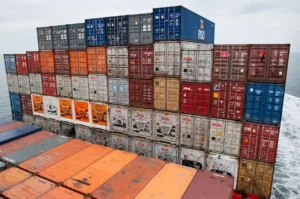
A flat rack container is a reinforced steel platform with fixed or collapsible end walls and no side walls or roof. Available in 20-foot and 40-foot lengths, flat racks allow cargo to extend beyond the frame in width, height, and sometimes length. A 40-foot flat rack can handle up to approximately 45 metric tons of cargo depending on the carrier and unit. They are the most commonly used solution for heavy machinery, steel structures, industrial equipment, vehicles, and boats. Because cargo is exposed to the elements, weather protection such as industrial shrink wrap or tarpaulins is often used for sensitive equipment.
An open top container is a standard container with a removable canvas roof instead of a solid lid. It is the right choice for cargo that is too tall to fit through the doors of a standard container but does not exceed standard width limits. Common examples include large spools, tall machinery, and coils. Open tops offer more weather protection than flat racks and are generally less expensive since the cargo remains within the container footprint.
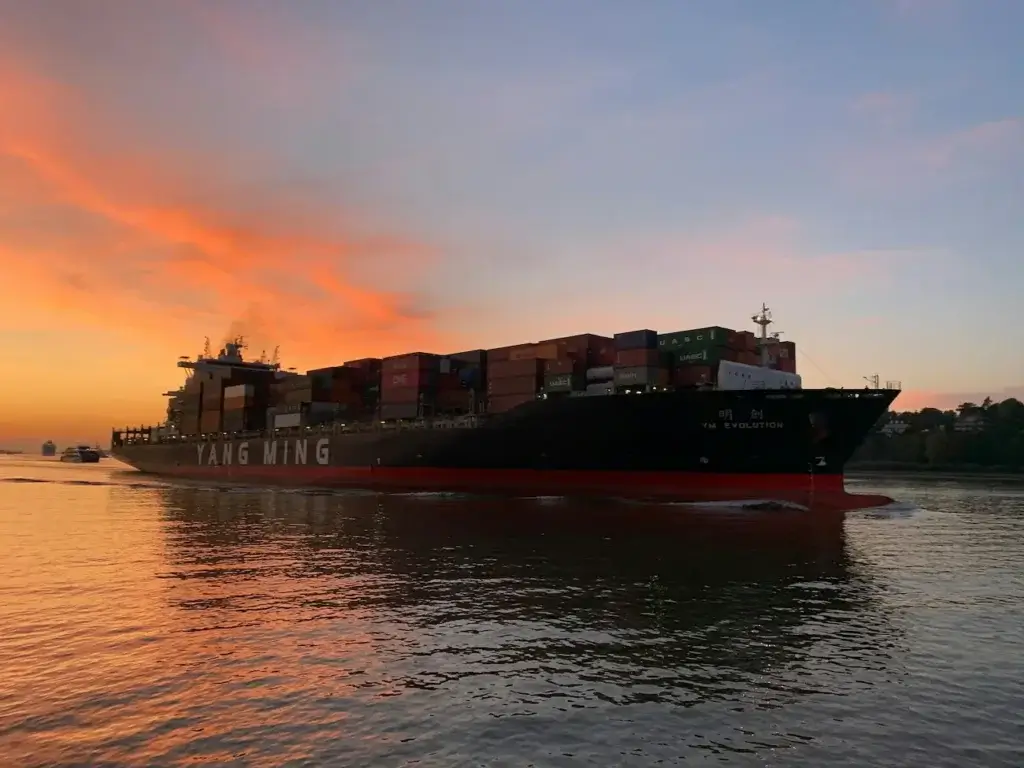
Break bulk shipping is the option when cargo cannot be secured on a flat rack at all due to its dimensions or shape. In break bulk, cargo travels outside any container entirely, loaded individually into a vessel’s hold or on deck. Steel beams, bridge sections, wind turbine blades, and extremely wide construction vehicles are common break bulk cargo types. According to UNCTAD data, break bulk cargo accounts for approximately 15 to 20 percent of global seaborne trade volume, driven significantly by infrastructure and energy projects.
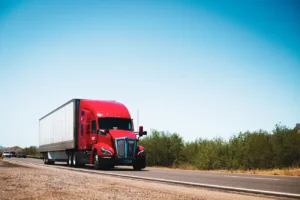
The right equipment choice also connects to how the cargo moves domestically. Once an OOG shipment clears port, it needs appropriate inland transport to its final destination. Jade’s Domestic Services can handle heavy haul and oversize ground transport, which means the same partner managing the ocean leg can coordinate the inland delivery as well.
Planning and Lead Time
OOG shipments require considerably more lead time than standard container bookings. Flat rack equipment represents less than 3 percent of the global container fleet, which means availability is limited, particularly on busy trade lanes. Submitting a pre-approval request at least three to four weeks before the cargo ready date is the standard recommendation.
Port crane availability at both origin and destination must be confirmed before booking. Not all terminals are equipped to handle heavy lift or OOG cargo, and scheduling crane time often needs to be arranged separately from the vessel booking itself.
For the inland legs, oversize transport permits for road moves can take anywhere from a few days to several weeks to obtain depending on the country, state, and specific dimensions involved. The truck, trailer type, and route often need pre-approval from transport authorities, and in some cases pilot vehicles or police escorts are required. The permit process is frequently the longest lead time item in an OOG shipment and should be initiated as early as possible. This is one area where having an experienced freight forwarder involved from the start makes a meaningful difference, as the coordination touches customs, carriers, ports, and ground transport simultaneously.
Documentation Requirements
OOG shipments carry specific documentation requirements beyond what standard container shipments require. Exact dimensions, including length, width, height, and weight, must be documented precisely before booking. Carriers require this information upfront to determine stowage position, calculate OOG surcharges, and assess whether the vessel can accommodate the load.
A lashing and securing plan is required by most major carriers for heavy or unusual OOG cargo. This document specifies the lashing points used, the type and capacity of lashing materials, the blocking arrangement, and the calculated securing forces. The plan must comply with the CTU Code, which is the international standard governing how cargo must be secured in containers and on flat racks.
The bill of lading must be endorsed with the OOG dimensions and any overhang. These details should be verified on the draft bill of lading before release.
Lashing and Securing
Improper securing of OOG cargo is one of the leading causes of cargo damage and vessel incidents. For flat rack shipments, lashing and securing is the shipper’s responsibility and must be completed before the cargo reaches the terminal. Carriers will not load OOG cargo that has not been properly secured, and failing a terminal inspection means paying for the work to be redone before the steamship line will accept it on board.
Key requirements include positioning cargo with its center of gravity in the middle of the flat rack both lengthwise and across, using anti-slip material between metal cargo and the flat rack floor, applying edge protection on sharp corners where lashing straps are used, and bracing cargo in both the length and transverse directions. For break bulk cargo, the trucking company transporting the load to the port is responsible for securing it for the road move.
Working With the Right Partner
OOG and break bulk shipments are not a service every freight forwarder handles regularly. Equipment sourcing, carrier relationships, port restrictions, lashing plan requirements, and permit coordination all require experience that goes beyond standard container shipping. Choosing a partner who handles this type of cargo routinely reduces the risk of errors and delays considerably.
Jade International’s specialized services include handling out of gauge and break bulk shipments across ocean export and import lanes. If your business moves heavy or oversized cargo internationally, reach out to our team well in advance of your cargo ready date so we can coordinate the equipment, documentation, permits, and carrier approvals your shipment requires.